
Concerning Frank Kermode
and digital fragility

When print arrived in the fifteenth century, people began to wonder if manuscript circulation would disappear. But although the printing press was, as the great historian Elizabeth Eisenstein put it, a massive “agent of change,” many literary, historical and other texts continued to be written and circulated in manuscript for at least two centuries. And although many medieval and later manuscripts are lost, many survive.
When the internet and the e-book came along, people began to wonder if printed books would disappear. But they won’t, not least because books are proving far more durable than digitalia. My only “lost” work is an edited compilation of the second series of the Arden Shakespeare, with supporting material from numerous other sources (including original Quarto and Folio facsimiles), which was produced in the mid-1990s via the then innovative medium of the CD-ROM. I suspect that there are now no more than a handful of computers anywhere in the world that can read it.
Then consider the case of defunct magazines. Whereas complete runs of 18th and 19th century periodicals, and 20th century “little magazines”, are available on the shelves of major research libraries (and, to be fair, have in many cases been helpfully digitized), “digital only” journals are more likely to disappear altogether once their website ceases to exist. Unless, perhaps, they were scraped by an engine such as the by-no-means-comprehensive Internet Archive.
For historians and biographers, the migration from physical letters in the mail to email also means that the preservation of that most intimate form of human exchange, the correspondence, will in the future be much more difficult to recover.
One of the aims of this Substack is to preserve bits of my writing that are widely scattered or now inaccessible. Ironically, though, once it disappears, it will be the old print texts that survive …
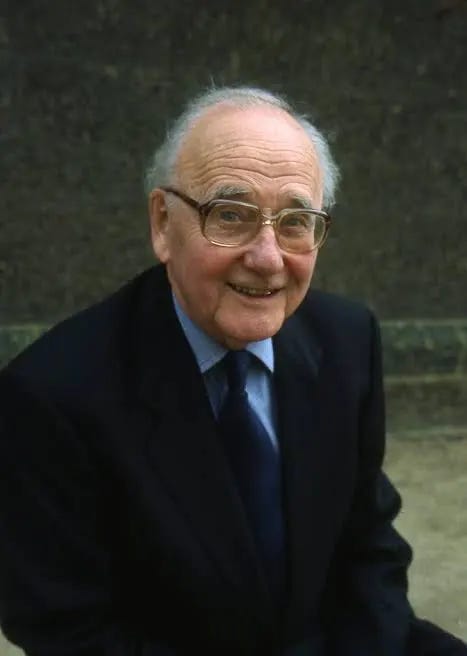
Not that I have any intention of disappearing any time soon, so here is another recycling of something that is no longer available in print or, as far as I can see, anywhere else online. I sometimes wrote for the defunct Standpoint Magazine, and this (stripped of a topical top and tailing that is now dated) is something I wrote about Sir Frank Kermode - who was one of my literary inspirations, although, as the piece argues, also someone who arguably contributed unintentionally to the decline of the discipline of literary study that has been so powerfully discussed by Substackers such as James Marriott.
The occasion was the publication in 2009 of his last book. I’ve added some links, together with a couple of clarifications in boldface, but I’ve kept it to the present tense rather than an obituary-like past.
My title echoed his:
CONCERNING FRANK KERMODE
Sir Frank Kermode is regularly described as Britain’s most distinguished — indeed ‘greatest’ — literary critic. [The authoritative British Academy memoir of his career rightly begins by describing him as ‘the pre-eminent critic of his generation’.]
In his heyday, literary criticism was thought to matter. The opinion — always frank, if sometimes detachedly Olympian — of Professor Kermode, expressed in the Listener or the Observer, was eagerly awaited. His acceptance of, and still more his premature departure from, the King Edward VII Chair of English Literature were considered to be of national interest. O tempora, O mores: does anyone outside Cambridge know, still less care, who now sits in the pre-eminent EngLit chair in the land?
There are many reasons why literary criticism has become a backwater with little more contemporary cultural purchase than that of classical philology or biblical hermeneutics. But no history of the discipline’s decline would be complete without pointing out that one of the principal architects of its deconstruction was its own leading practitioner: Frank Kermode.
He has just [i.e. in 2009, the penultimate year of his life] published a genial book called Concerning E. M. Forster (Weidenfeld & Nicholson, £14.99). It consists of three Clark Lectures, delivered in the Cambridge where, like Forster before him, Kermode eventually found a home, together with a ‘causerie’ (ie, some high-class chatter) ranging around the recesses of the novelist’s work. Kermode is, as one has come to expect, fascinating and informative on such subjects as musical structure in Forster’s novels. His judgment on the strengths and weaknesses of Forster’s own Clark Lectures, Aspects of the Novel, are unerring, as his judgment nearly always is. The ‘causerie’ is full of this sort of thing:
The words quoted by Forster come from one of a series of poems written, with great force and exaltation, in archaic Italian … by the 13th-century Spiritual Franciscan poet Jacopone da Todi. The poems are addressed to divine Love; the nearest English equivalent, not all that close, might be the baroque religious verse of Richard Crashaw four centuries later. Matthew Arnold knew about Jacopone (see his sonnet ‘Austerity of Poetry’) and Forster knew his Matthew Arnold; but it happens that Evelyn Underhill, author of Mysticism, which became the standard English work on the subject, published a biography of Jacopone that made him more accessible and included translations. Underhill was a disciple of Baron von Hügel, who, as Yeats remarked, accepted the miracles of the saints and honoured sanctity.
‘Golly’ is one’s first thought. If I could hold all this stuff in my head at the age of 90, I’d be doing all right. The man is a walking encyclopaedia of the high culture of the West. If we were the Japanese we’d have officially designated him a Living National Treasure.
Kermode’s mind is never provincial. His most influential teacher, the brilliant alcoholic D. J. Gordon of Reading University, was reared in the cosmopolitan ‘Warburg’ school of cultural interpretation, which excelled in the excavation of complex trans-national and transhistorical influences of the kind that are sketched here.
But the second thought is this. The vast majority of young lecturers in EngLit are profoundly uninterested in Forster. So Edwardian, so male, so English. Fodder only for articles with titles such as ‘Imperialism, class and the English country house in Howards End’ or ‘Masculinity amalgamated: colonialism, homosexuality and Forster’s Kipling.’ The very idea of a cosy causerie bringing Forster into alignment with Richard Crashaw, Matthew Arnold and Evelyn Underhill would be anathema to most youthful members of Kermode’s profession (outside Oxford and Cambridge).
Why so? Because those junior colleagues entered the academic profession during the Age of Theory. And who did more than anyone else to domesticate French Literary Theory in the late 1960s and ’70s? Frank Kermode.
From the very beginning of his academic career, Kermode has been interested in how literary texts work as systems, how they create autonomous worlds that in important senses stand apart from the real world. His first book, published in 1952, was an anthology called English Pastoral Poetry from the Beginnings to Marvell (W. W. Norton). In a remarkable introduction, written under the influence of the maverick critic William Empson, Kermode argued that pastoral is in some sense the defining literary form because the enclosed second world that it creates — Shakespeare’s Forest of Arden, Andrew Marvell’s imaginary gardens — is an analogue for the literary work itself. It is a line of argument that anticipated the words of Paul de Man, high priest of literary Deconstruction, by some 30 years: ‘There is no doubt that the pastoral theme is, in fact, the only poetic theme.’
Kermode followed up, and established his reputation, with the 1954 Arden Shakespeare edition of The Tempest, the work that perfectly illustrates this theme, via the analogy between the play itself and the magical island where it is set. Again, the introduction was magisterial, offering hugely influential treatments of black versus white magic and the debate between art and nature. A couple of years later came Romantic Image (Routledge), a book that Kermode later said he dashed off in six weeks one summer because he wanted to explain to himself the origin and context of W. B. Yeats’s great line, ‘How can we know the dancer from the dance?’
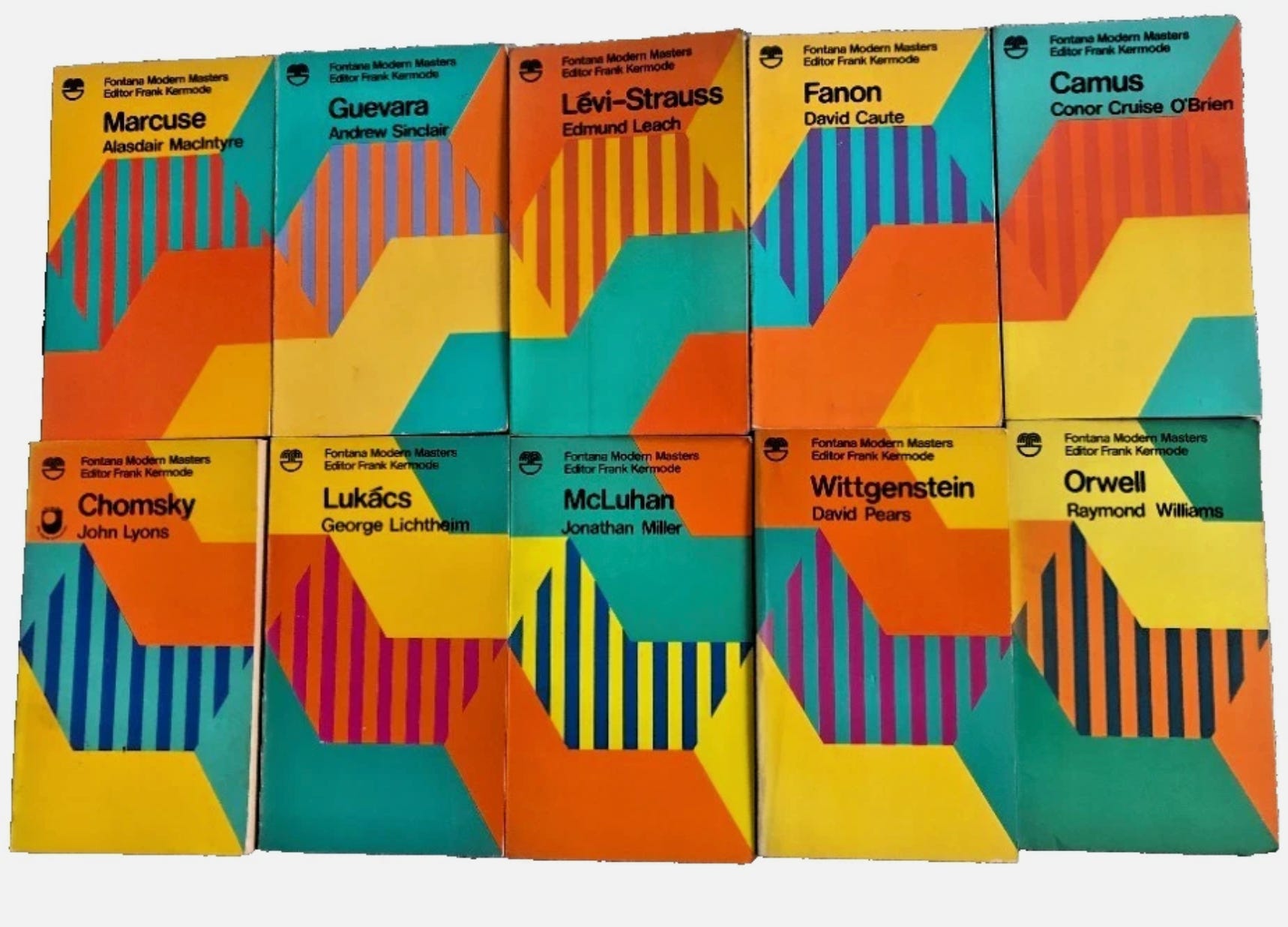
Having proved himself as adept a reader of modern literature as of the Renaissance, Kermode was now in a position to reach beyond the specialised world of the academy. He became a sought-after reviewer and publisher’s adviser. ‘This is the age of the guru,’ he told Fontana Press. ‘We should do a series of gurus.’ They did: the Modern Masters, for which he served as editor, was phenomenally successful in providing comprehensible introductions to many of the demanding thinkers who shaped the intellectual life of the 20th century. When I was 17, everything I knew about Wittgenstein, Freud, Nietzsche, Chomsky, Lévi-Strauss and a dozen other daunting names came from these dazzling little volumes with their cool geometric cover designs.
The poet who proves most congenial to Kermode’s sense of the literary work as an autonomous second world, sufficient unto itself, is the American actuary, Wallace Stevens. Kermode’s elegant and deeply intelligent study of his work was the first book on him to have been published in England. ‘Notes towards a Supreme Fiction,’ the title of Stevens’ manifesto poem, could serve as the epigraph for Kermode’s entire literary-critical career.
Over the years, he became increasingly interested in the most supreme fiction of all: the Bible. The narrative line from Genesis to Revelation might be considered the archetype for all literary works. Kermode’s 1967 study The Sense of an Ending (OUP) developed a theory of narrative out of such a thought, focusing on closure rather than opening: to imagine apocalypse is to impose order on the chaos of experience by suggesting that everything is leading to a particular ending. This, Kermode suggested, is what fiction means. We might call the proposition a postmodern twist on the Whig interpretation of history.
The Genesis of Secrecy (Harvard, 1979) also uses the Bible as its archetypal text. But here something has changed. The figure of the Interpreter has come into the foreground. The confident sense of structure that shaped the earlier books has disappeared and Kermode is now fascinated by gaps and absences, loose ends and contradictions. There is a strange little vignette in Mark’s Gospel when Jesus is arrested: ‘And they all forsook him, and fled. And there followed him a certain young man, having a linen cloth cast about his naked body; and the young men laid hold on him: And he left the linen cloth, and fled from them naked.’ This marginal figure of the naked young man — about whom we hear nothing more — becomes Kermode’s symbolic interpreter. In seeking to strip the veil of obscurity from the text, he exposes not its meaning but his own nakedness.
What happened between 1967 and 1979 was that Kermode fell for the seductive charm of French Theory. As Lord Northcliffe Professor of Modern English Literature at University College London, he hosted a famous seminar that brought all the new gurus from Paris and Yale. This was the age of ‘the death of the author’ and of Jacques Derrida’s claim ‘il n’y a pas de hors-texte’ (‘there is nothing outside the text’). Kermode welcomed the new. Deconstructive Theory seemed but the logical extension of the idea of textual autonomy that he had developed in his work on pastoral, on Stevens and on the temporal structure of narrative. And there was quiet satisfaction to be derived from shaking up the tweedy Oxbridge-dominated world of EngLitCrit.
But he unleashed a tide that he could not stem. His own interpretations were always grounded in scholarship, rationality and tradition — that Warburg inheritance. He wrestled with the question of the limits of what we may reasonably say about a literary work. Does anything go? Can interpreters do what they like with texts? Kermode knew when to draw the line himself but was unable or unwilling to tell others that they must do so. His very tone and temperament, in both seminar and print, made him unwilling to take a stand. He was hospitable to all interesting lines of thought. He might raise an eyebrow or introduce a sceptical qualification, but he did not have a taste for confrontation. This tendency was consistent with his practice as editor of the Fontana Modern Masters, where he saw it as his role to keep all the balls in the air, to accord equal respect to such ‘masters’ as Marcuse, Mailer, Marx and McLuhan.
They ordered these things differently in Cambridge. There was an English faculty where you were either in or out, one of us or one of them. F. R. Leavis had spent years as an insider representing himself as an outsider. George Steiner had failed to gain a position in the Faculty. Not long after ascending the King Edward VII Chair, Kermode found himself at the centre of the MacCabe Affair. A young don who was into Theory had lost out in the scramble for promotion from Assistant Lecturer to Lecturer. This should have been a purely domestic matter, but somehow it turned into a national news story about the Theory Wars, leading to the edifying spectacle of the Sun trying to explain a new kind of Deconstruction to readers more accustomed to ogling page three girls while wielding a wrecking ball on a building site.
Kermode became fed up with the whole thing, discovered that his wartime naval service counted towards his pension, and took early retirement. In the 30 years since, he has stood apart from the fray within the academy by pursuing the higher literary journalism in the pages of the New York Reviews of Books and its London counterpart. He has bequeathed his uncanny gift for unpicking the figure in the carpet of a book to a few followers, most notably James Wood of the New Yorker. But his considered, intricate mode of very literary criticism is a world away from the practice of English in most university departments in the 21st century.
The story of what has happened since Kermode’s formal retirement in 1982 is a complicated one. In essence, the deconstructive turn decisively shifted the balance of power from author to reader. This made it possible for interpretation to begin not from the patient elucidation of the fine-grained texture of literary works but from the ideological predispositions of professional and often politically-motivated readers. Theory came before practice and works of literature came to be studied primarily as manifestations of extra-literary phenomena, most notably gender, race, class, sexuality and various kinds of imperialism. Musical patterns and Renaissance allusions in Forster were out. Forster and racism, Forster and ‘Queer Theory’ were in.
One of the great merits of Sir Frank Kermode’s criticism has always been its inscrutability. You cannot legitimately infer from it how he casts his vote in the privacy of the polling station. The most uncomfortable moment in his career was his discovery that Encounter magazine was being secretly funded by the CIA. He resigned from the editorial board. For Kermode, good criticism, like great literature, has always begun in disinterestedness. It should never be propaganda. He has many achievements to be proud of, and I am sure that like Piaf he regrets nothing, but does he ever wake in the night and wonder about his own role in the process whereby the profession of LitCrit came to believe that literature is not a place of its own, an autonomous second world, but merely the ‘site’ for a series of familiar political struggles?
Thank you for this. It reminded me that Philip Roth was interviewed for the New Yorker by David Remnick in 2000. Remnick asked Roth about various questions that had been posed to him at a literary festival in Aix. These were very much based in French theory, emanating from university students. Roth answered with an analogy to a baseball game, which amuses me and has always stuck in my mind, having been a post-grad in an English Department the late ‘90s.
“Later, when I asked Roth about such readings, he laughed, and said, “It’s like baseball. Suppose you and I went up to the ballpark together, and there’s a guy next to us with his kid. And he was saying, ‘Now, what I want you to do is watch the scoreboard. Stop watching the field. Just watch what happens when the numbers change on the scoreboard. Isn’t that great? Now, do you see what just happened up there? Did you see what happened? Why did that happen?’ And you say, ‘That guy is crazy.’ But the kid imbibes it and he goes home and he’s asked, ‘How was the game?’ And he says, ‘Great! The scoreboard changed thirty-two times and Daddy said last game it changed only fourteen times and the home team last time changed more times than the other team. It was really great! We had hot dogs and we stood up at one point to stretch and we went home.’ Is that politicizing the baseball game? Is that theorizing the baseball game? No, it’s having not the foggiest idea in the world what baseball is.””
Very much enjoyed reading this. As someone who strives to start with that “disinterestedness” when they read and write, I ought to know more about Kermode. You’ve mentioned several of his works here, Jonathan. Is there a best place to begin with him?