
Milton's Lenten Rustication
or, the first signs of poetic genius

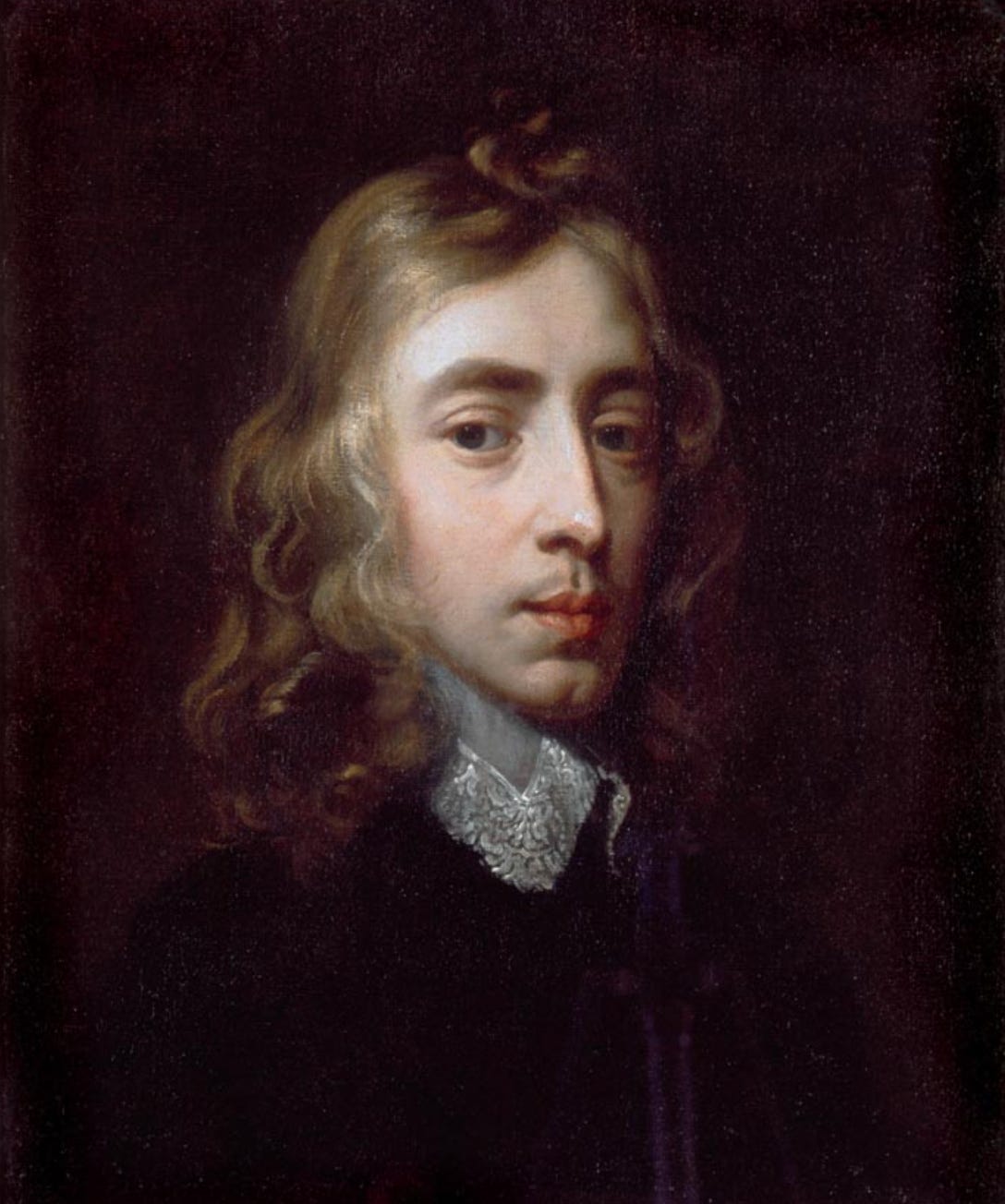
For centuries, the season of Lent has, er, lent its name to the spring term in many educational institutions. Cambridge University, for instance. It was there, exactly four hundred years ago, in the Lent term of 1626, that a fine-featured seventeen-year-old student called John Milton first revealed his potential to become the finest poet of the age.
Ironically, the breakthrough may have been the result of an inauspicious moment in his academic career. That was the term when he was allegedly rusticated (temporarily sent down, or as we would now say, suspended) as the result of a quarrel with his tutor, William Chappell. John Aubrey, that irresistible but unreliable gossip of the Restoration era, claimed that Chappell had whipped his pupil for insubordination; it is more likely that the argument was academic, probably theological.
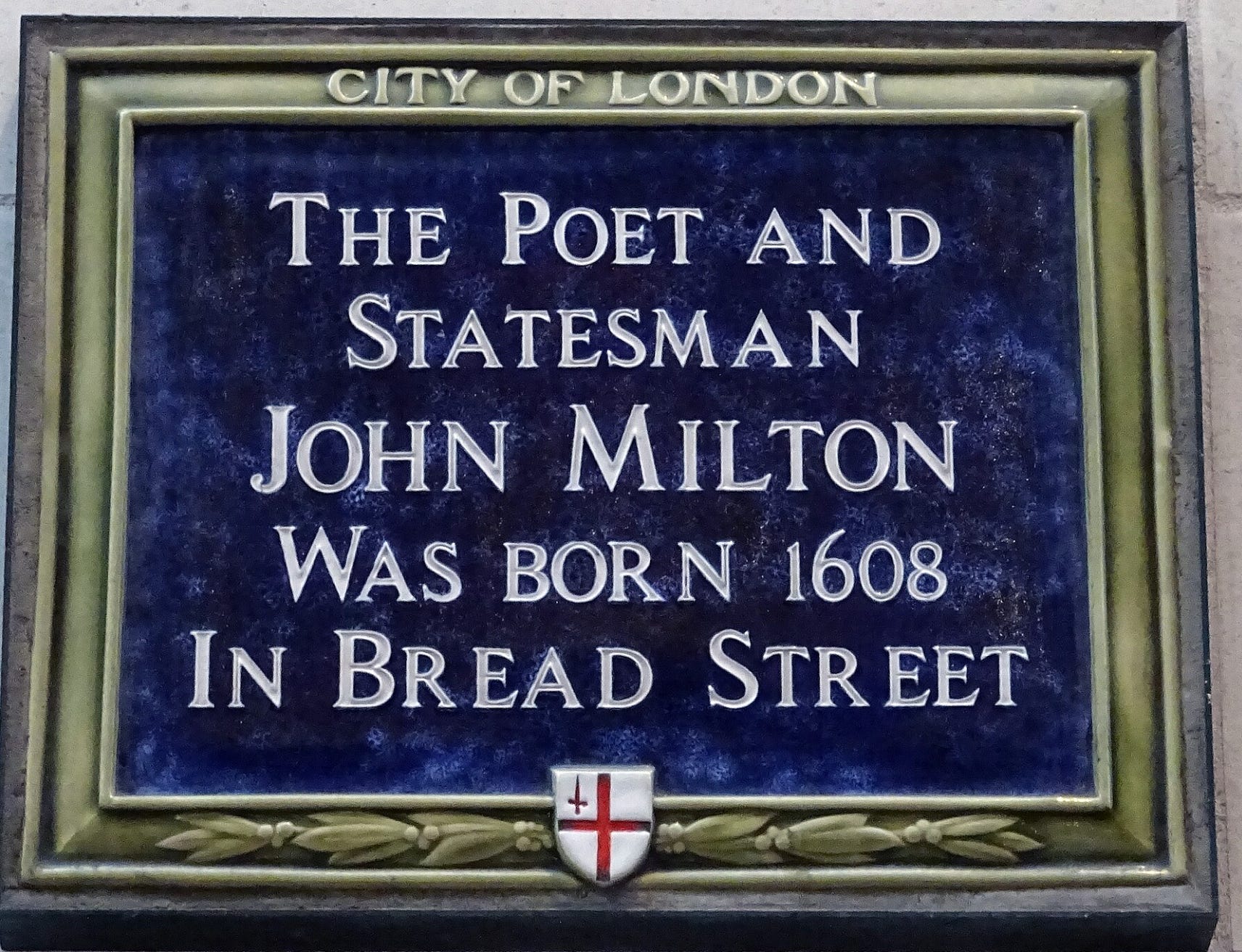
Whether as a result of mid-term rustication or merely the end of the Lent term, by Easter Milton was back at his father’s house in Bread Street, Cheapside, among the books and music that had shaped his earliest years. He could read what he chose, think what he liked, and write.
And write he did. The poem that emerged from these weeks of enforced leisure was Elegia Prima (“First Elegy”), addressed in Latin to his closest friend, Charles Diodati. It is a letter in verse, at once affectionate and brilliantly self-dramatizing. By a brilliant conceit, he reverses the elegies that his favourite classical poet Ovid had written in exile on the Black Sea: where Ovid lamented his exile from the urbanity (and sexual opportunities) of Rome, Milton celebrates his own exile from the reedy banks of the Cam, from the medieval scholasticism he had grown to despise and the fog of compulsory disputations conducted in a Latin that smelled of the schoolroom rather than of Virgil or Ovid himself. Exile to a city that is alive, capacious, indifferent to academic hierarchy: bring it on, he is saying. He describes the theatres, the city parks, the intoxicating abundance of cultural life, with energy and delight beneath the elegant classical dressing.
It is also a poem that revels in the presence of women, in sharp contrast to the all-male confines of a Cambridge college. Here’s a loose translation of some of the Latin:
Here, more than once, you’d watch the girls go past,
Their starlike eyes alive with gentle flame.
How many times I’ve stood, struck still as glass,
Before such beauty as could re-inflame
Old Jove’s spent youth! How many times those eyes
Have blazed past every gem, surpassed the light
Of all the torches either pole lets rise
And wheel across the sky — those arms, that white
And lovely neck that shames the famous glow
Of Pelops, twice alive; that sweet soft way
Which flows as though with purest nectar; so
The noble brow; and curls of gold that sway —
The shining nets which Love the Cheat spreads wide
To snare the hearts of mortals far and wide.
When he returned to Cambridge later that year, it was under a new tutor, Nathaniel Tovey. Now Milton began to find university life tolerable, perhaps even stimulating. His nickname among fellow students — “The Lady of Christ’s,” a jibe at his fair complexion, his slight build, his conspicuous distance from the athletic rough-and-tumble of college life — tells us something important: that he was noticed, that he already seemed singular, an object of fascination as much as mockery.
The poem that followed his return, In Quintum Novembris (“On the Fifth of November”), is a different creature altogether from the warm epistolary ease of Elegia Prima. Two hundred and twenty-six lines of muscular Latin verse, it takes as its subject the Gunpowder Plot of 1605 — Satan himself descending upon Rome, goading the Pope to destroy Protestant England. It is a young man’s poem in the best sense: extravagant in its ambitions, intoxicated by its own energy, reaching far beyond what the academic exercise technically required. Here, already, is the Milton who would one day people an entire cosmos with fallen angels and warring celestial powers. The Satanic machinery, the cosmic stakes, the fierce Protestant confidence: all are present in embryo.
In the space of a single year, through quarrel, exile, and return, the poet had found himself. He was not yet eighteen.
The rest is history. His first published work appeared in 1632, a fine poem in praise of Shakespeare, prefaced to the second printing of the Folio. Soon after, he was commissioned to write a masque for aristocratic performance at Ludlow Castle. Known as Comus, it luxuriates in gorgeous lyricism whilst simultaneously packing a moral punch: that combination came to be the Miltonic hallmark. Thus Lycidas, an elegy on a fellow Cambridge student whom he hardly knew, is at once a brilliant imitation of classical pastoral (“Weep no more, woeful shepherds, weep no more”) and an assault on the corruption of the English clergy.
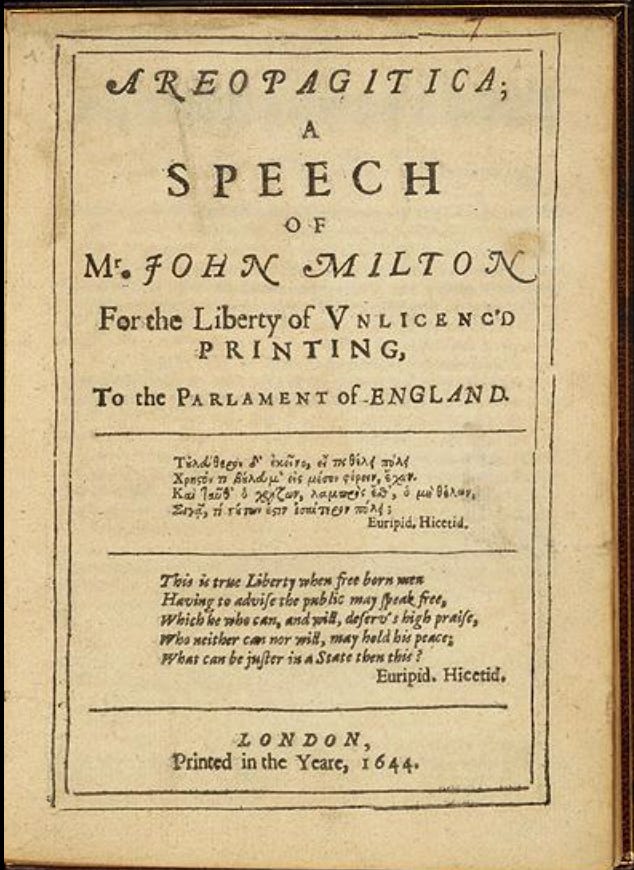
After Cambridge, Milton went on a continental tour, immersing himself in culture, then returned to London to become a schoolmaster. In the 1640s he wrote various pamphlets, attacking bishops, standing up for the freedom of the press, and defending divorce. He was more than 300 years ahead of his time in proposing that irretrievable breakdown of a marriage was sufficient grounds for divorce. During the trial of King Charles I he wrote a pamphlet On the Tenure of Kings and Magistrates, in which he argued that it was lawful “for any who have the power, to call to account a Tyrant or wicked King and after due conviction, to depose, and put him to death”. That is exactly what Oliver Cromwell and his followers did at the end of January 1649.
A calling to account of an allegedly wicked royal? … Not just an old story …
Milton’s justification of the regicide was just the ammunition that Cromwell and his men needed: he was rewarded with the post of the ruling Council’s Secretary for Foreign Tongues. This meant not only drafting diplomatic correspondence in Latin, but also advising on policy. He recommended draconian action in Ireland. A little of the blood shed by Cromwell’s men at Drogheda and Wexford must stick to Milton’s hands.
The great paradox of Milton is that his supreme achievement, Paradise Lost, the epic poem that sought to “Justify the ways of God to men”, was written not in these years of success and fame, but out of the experience of defeat and loss. After the Restoration in 1660, an order went out for the arrest of Mr Milton, chief literary apologist for the Commonwealth. His books were burned.
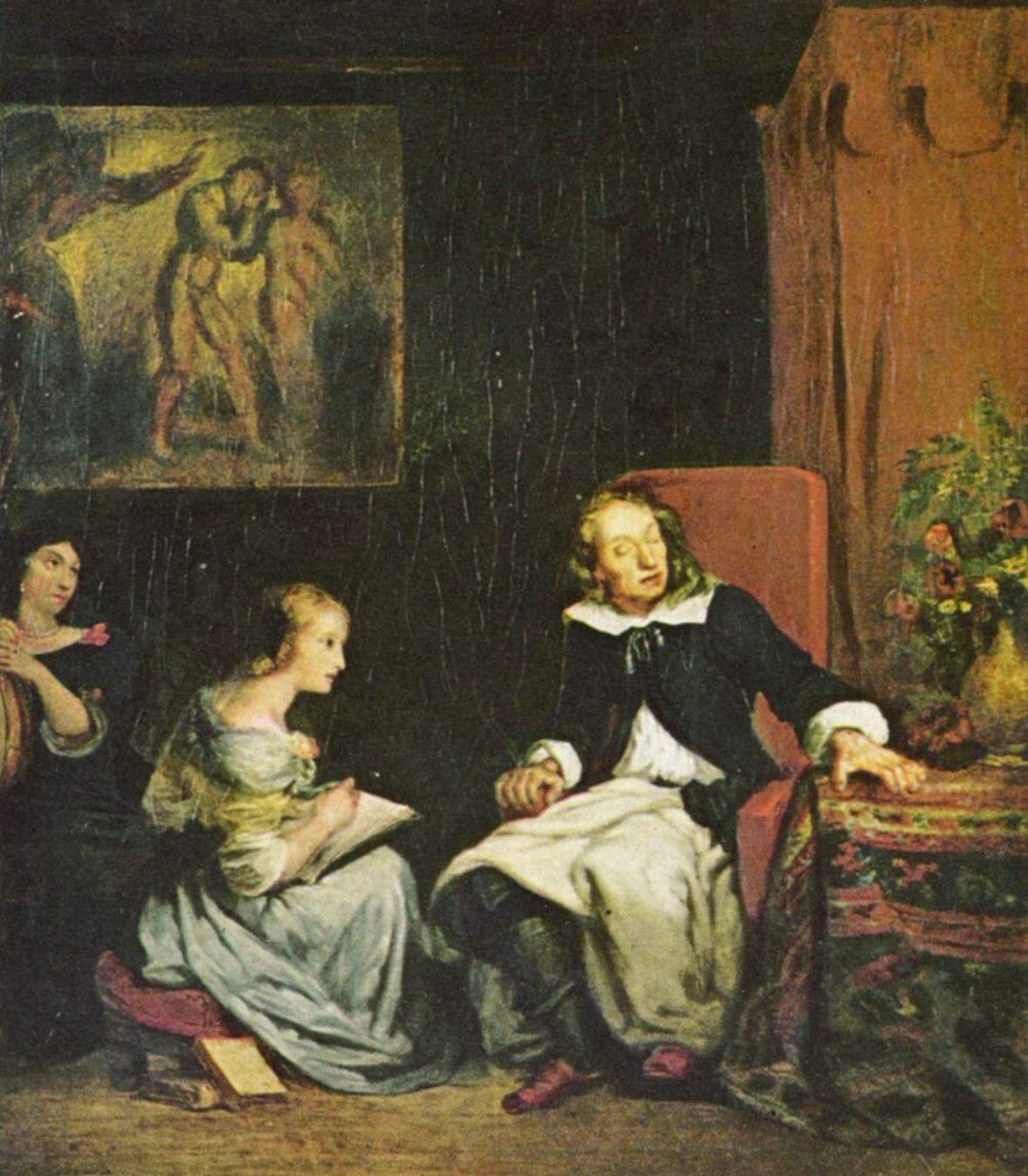
He went rapidly from hiding to obscurity. And by this time he was blind. Detached from the London of Pepys and the decadent court of Charles II, he composed his vision of Paradise and its loss in the small hours of the night, dictating his verses to an amanuensis each morning. Thanks to an enterprising family printing firm, presided over by a redoubtable lady called Mary Simmons, Paradise Lost was preserved for posterity.
He died in 1674. The Poet Laureate John Dryden had plans to turn Paradise Lost into an opera, but the producers couldn’t work out how to deal with Adam and Eve’s nudity. The poem endured on the page and shaped the 18th-century movement away from rhyme and towards blank verse. The Romantics became obsessed not only with Milton’s grand style but also with the charismatic figure of Satan. Blake said that Milton “was a true Poet, and of the Devil’s party without knowing it”.
But the 20th century saw a sharp decline in his reputation. T. S. Eliot and Dr F. R. Leavis were distinctly sniffy and the decline of high Christian seriousness meant that Milton lost his core audience. For a while he continued to be compulsory reading in some of the major American universities, where the Puritan inheritance perhaps remained a living force, but with the assault on the “canon” of “dead white European males” that is no longer the case. But has his time has come again as we re-enter an age like his, where extreme politics meet strong religious faith, and where the limits of freedom and free speech are under debate?
I’ve been posting daily to kickstart this Substack, but I can’t keep that up, so from now on there will be just one or two free posts per week.
A most enjoyable review of Milton.
I once attended a reading by Richard Wilbur. Asked what poets had influenced him the most, he replied: "Frost, and of course Milton." Noticing the somewhat bewildered look on some faces at the mention of the latter name, he added "for the sound."
Milton does offer us an unsurpassed sonority; there is no better poet to train the ear. I suspect that as we resist the onslaught of AI, increasing attention will be paid to the artistry of sound, both in poetry and prose.
BTW, loved your reference to Michael Foot, who was indeed a fine writer. Thanks again for a stimulating article.
‘did‘ PL books 4 & 9 for A level in the mid 60s - loved it. Followed that up at uni a year later (that and Shakespeare all I enjoyed of English degree)