
Taylor Swift
How good is her poetry?

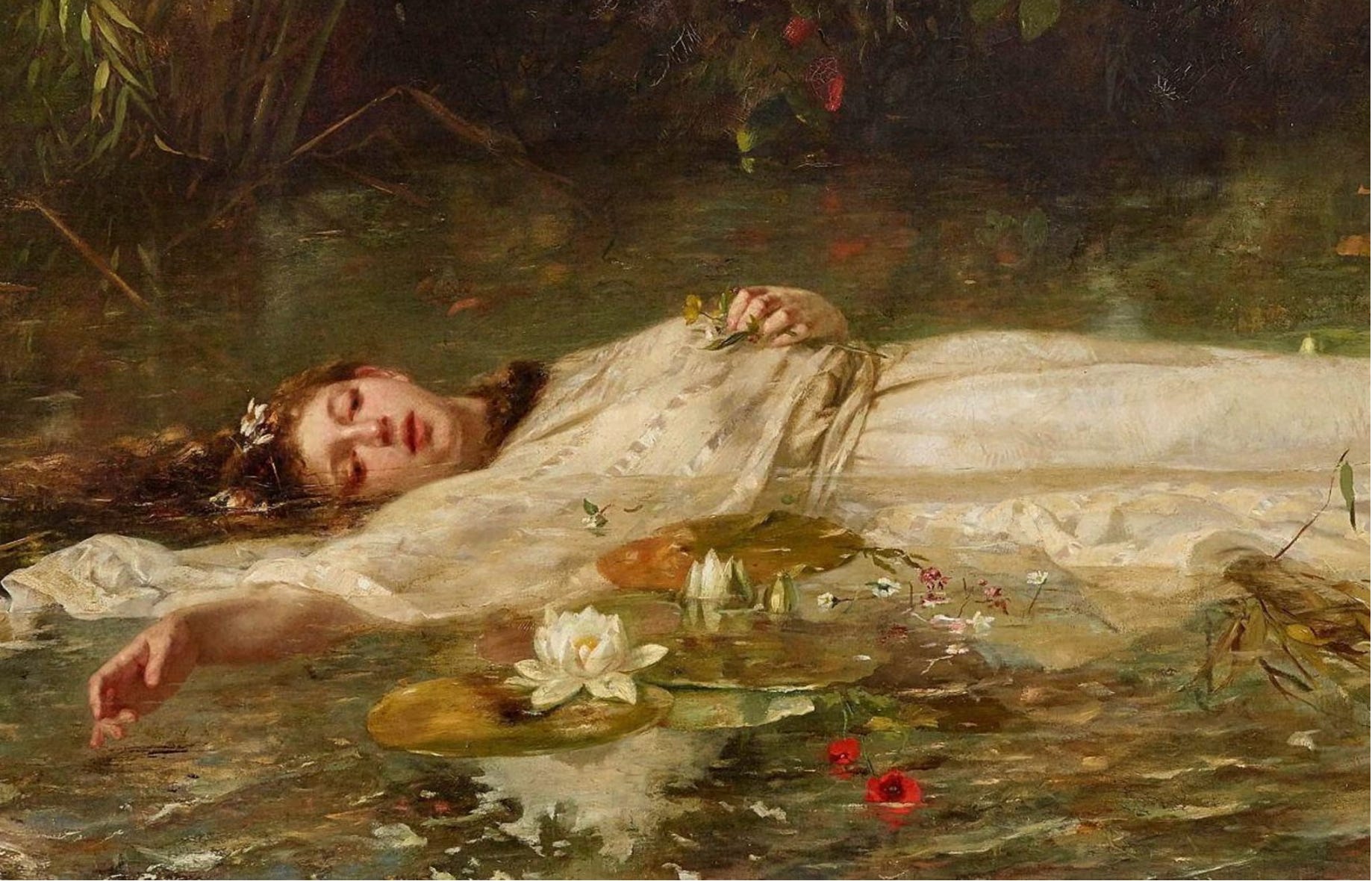
I’ve just posted about Sylvia Plath and Anna Akhmatova, without question two of the most brilliant and innovative poets of the modern era. Can the lyrics of Taylor Swift really hold their own in such company? A couple of years ago I made high claims for Folklore and Evermore in a piece for the London Times. So, since I’m mingling new articles with old ones liberated from behind paywalls, I’m reprinting it here. With two caveats: “literary giant” was the newspaper’s clickbait headline for the story, not mine. But I stand by “real poet.” However - second reservation - I have to say that, despite its promising title, The Tortured Poets Department didn’t match up to the previous albums. As for The Life of a Showgirl, while a song such as “The Fate of Ophelia” maintains the literariness, certain other lyrics are best passed over. Especially those regarding her fiancé. I’ve often wondered: do poets lose their inspiration once they are happily married or on the brink of marriage? Indeed, I argued in Radical Wordsworth that this might well have been a factor in the great poet’s long decline. Ah, Wordsworth: he was one of my hooks for the piece that follows …
When I came to the end of my time as Head of an Oxford College and accepted a professorship at Arizona State University, I thought there would be many new opportunities: the chance to devise interesting new courses, ample time for academic research and writing, perpetual sunshine. What I could not predict was the present my wife and I received from our daughter one Christmas: an envelope containing tickets for the opening concert of Taylor Swift’s Eras tour, which happened to take place in the 80,000-seat football stadium down the road in Glendale.
Unlikely as it may seem for a Shakespeare scholar of advancing years, I have to confess to being something of a Swiftie. And insufficiently spangled as was my attire, I had one of the best nights of my life at her breathtakingly spectacular concert, in which the production values and costume changes surpassed anything in Las Vegas, but were themselves surpassed by the energy, charisma and discipline of Swift herself, who worked her way through forty-four songs in three and a quarter hours without a break. Listening to her lyrics—which most of the rapturous (mainly female) audience seemed to know by heart—I came away thinking: this isn’t just high-class showbiz, she’s a real poet.
My initiation came fifteen years ago. Browsing in a Borders bookstore in Ellesmere Port, my ears pricked up to a country-inflected love song being piped from behind the tills. It began with a young girl standing on a balcony in summer air. “Aha,” I thought, “I know where this is going.” And, sure enough, I had an addition to my lengthy list of Shakespearean references in popular culture: “You were Romeo, you were throwin’ pebbles / And my daddy said, ‘Stay away from Juliet’.” I walked out with a CD of Fearless, the breakthrough album of the eighteen-year-old Taylor Swift, hitherto little known outside country music circles. I gave it to my eight-year-old daughter, and my discovery made me rather cool in the eyes of her friends, none of whom had heard of Taylor, but all of whom eventually became Swifties.
Her “Love Story” is an almost perfect pop song, with its catchy hook, driving rhythm and ingenious use of acoustic instruments such as the banjo and mandolin. In Romeo and Juliet Shakespeare more or less invented the idea of the teenager in love (it was an old story, but no previous version made so much of Juliet’s youth). So the play was the ideal reference point for a young artist whose trademark theme was heartbreak—usually her own. Most of the songs on Fearless have the geeky girl being dumped for a hotter chick, as in the witty “You belong with me”: “she wears short skirts, I wear T-shirts / She’s Cheer Captain and I’m on the bleachers.”
In Shakespeare, though, Death rather than a cheerleader is the adversary who takes Juliet from her Romeo. Teenage suicide would have been too cruel a twist for the song, so Swift reworked the ending: her Romeo tells Juliet that he’s spoken to her dad and she can “go pick out a white dress.”
This revision is in the tradition of rewriting Shakespeare to make his darker moments more palatable, a custom that goes back to the Restoration era of the late seventeenth century, when the dramatist Nahum Tate produced a King Lear in which Cordelia is happily married off to Lear’s godson Edgar instead of being hanged at the behest of her evil sisters. Swift was perhaps ahead of the game in applying this technique to the tragedy of the star-crossed lovers: in 2021, the American Stage Theatre Company presented Romeo and Juliet in America (The One with the Happy Ending) and if you happened to be in Santa Monica in the summer of ’22 you could have seen a play called Romeo and Juliet: Choose Your Own Ending. Or, as Swift puts it in “Exile”: “I think I’ve seen this film before / And I didn’t like the ending.”
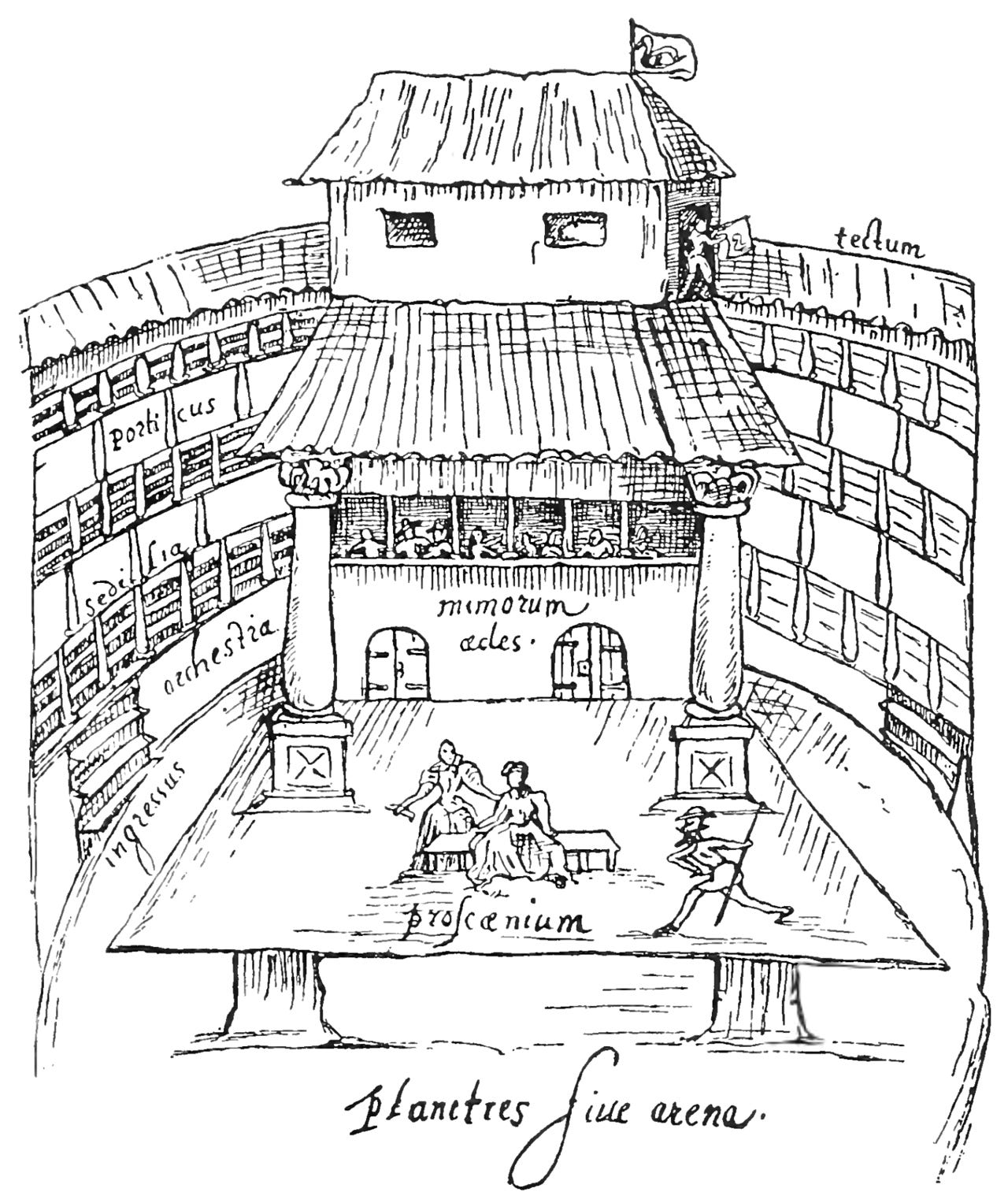
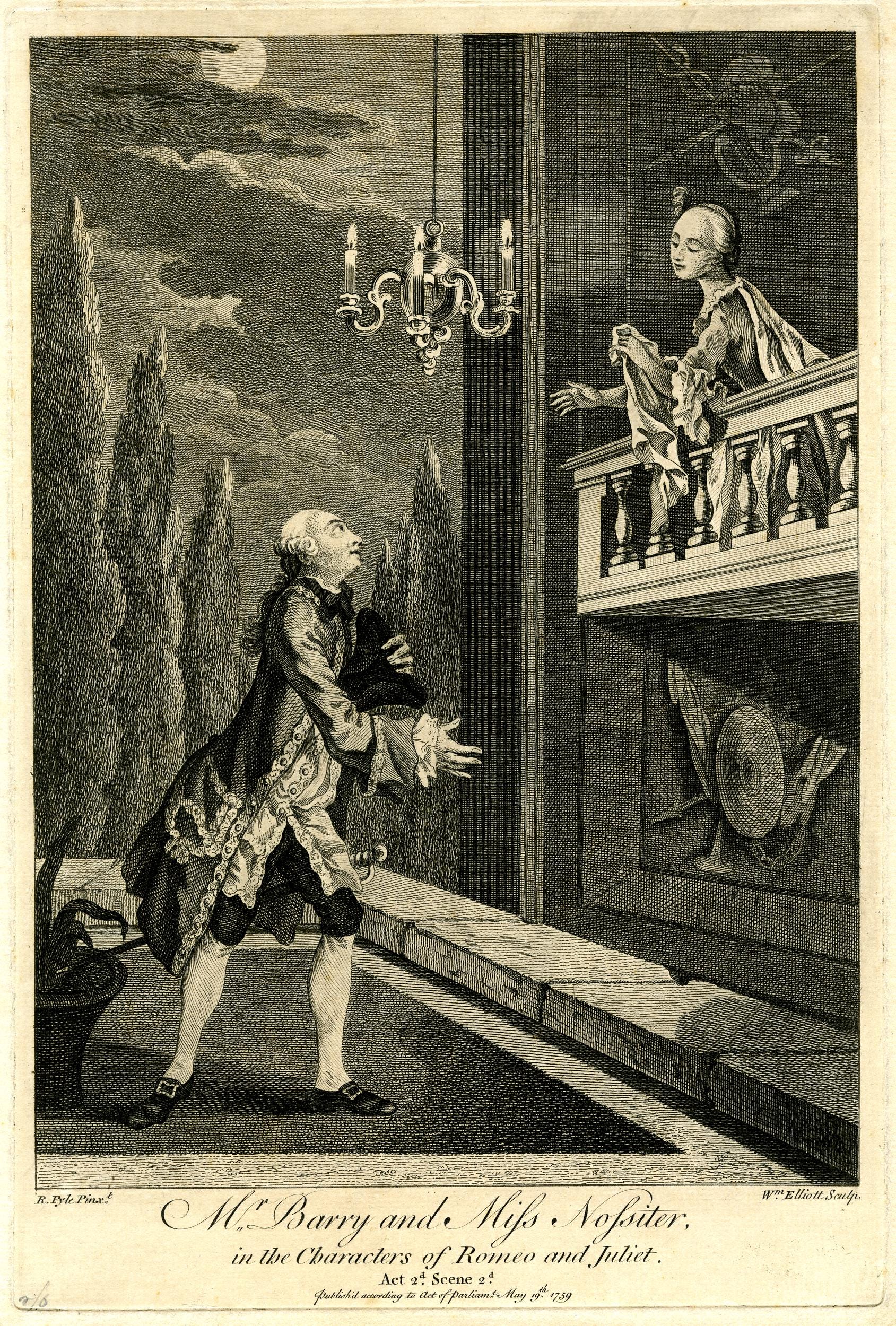
When I was the Shakespeare professor at Warwick University, I started using the Romeo and Juliet song as a teaching tool. That balcony, for example. Try to find it in the original text. There is no balcony, only “But soft, what light through yonder window breaks? / It is the east and Juliet is the sun.” The boy actor playing Juliet would have been on the upper stage area, which in the Elizabethan theatre often represented an upper floor window (think of Jessica’s escape in The Merchant of Venice), but there wouldn’t have been a balcony with a balustrade. That was introduced in the eighteenth century, most famously in a Drury Lane stage production by David Garrick. Telling this story was a good way of showing students how Shakespeare has been changed and adapted down the ages.
Some years later, as part of the BBC’s programming to mark the four hundredth anniversary of Shakespeare’s death, I was asked to devote my “Private Passions”—the Radio 3 equivalent of “Desert Island Discs”—to music inspired by Shakespeare. To illustrate the pervasiveness of his influence, I asked to include Swift’s “Love Story” alongside more highbrow fare such as Wagner’s opera based on Measure for Measure and Richard Strauss’s setting of Ophelia’s mad songs. The presenter, Benjamin Britten’s protégé Michael Berkeley, gave his musical imprimatur: “we probably can’t top this,” he said, wryly, and we ended the broadcast with “Love Story” preceded by Claire Danes’ rendition of the “Take him and cut him out in little stars” speech in the Baz Luhrmann film Romeo + Juliet.
By then, Swift was not a little but a very big star. Middle period rocking, rapping Taylor did not really do it for me. But during the pandemic my daughter, whose passion for Taylor Swift has never faded, alerted me to the bonus track released on the deluxe version of the folklore album, which was garnering rave reviews. “It’s about the Romantic poets and the Lake District, dad,” she said, knowing that my other area of expertise is nineteenth-century poetry and Wordsworth in particular. Intrigued, I took a listen. “The Lakes” is a beautifully composed song which begins
Is it romantic how all my elegies eulogize me?
I’m not cut out for all these cynical clones
These hunters with cell phonesTake me to the Lakes where all the poets went to die
I don’t belong, and my beloved, neither do you
Those Windermere peaks look like a perfect place to cry
I’m setting off, but not without my muse …
I’ve come too far to watch some namedropping sleaze
Tell me what are my words worth.
The “namedropping sleaze” is Scooter Braun, the record executive who sought an astronomical sum for the buyout of the master tapes of Swift’s first six albums—an offer she brilliantly evaded by re-recording “Taylor’s Version” of every one of them. But “Wordsworth” (as it appears on the official lyric video) also signals the original Romantic who was the first poet to write elegies—not to mention an epic—that eulogized himself.
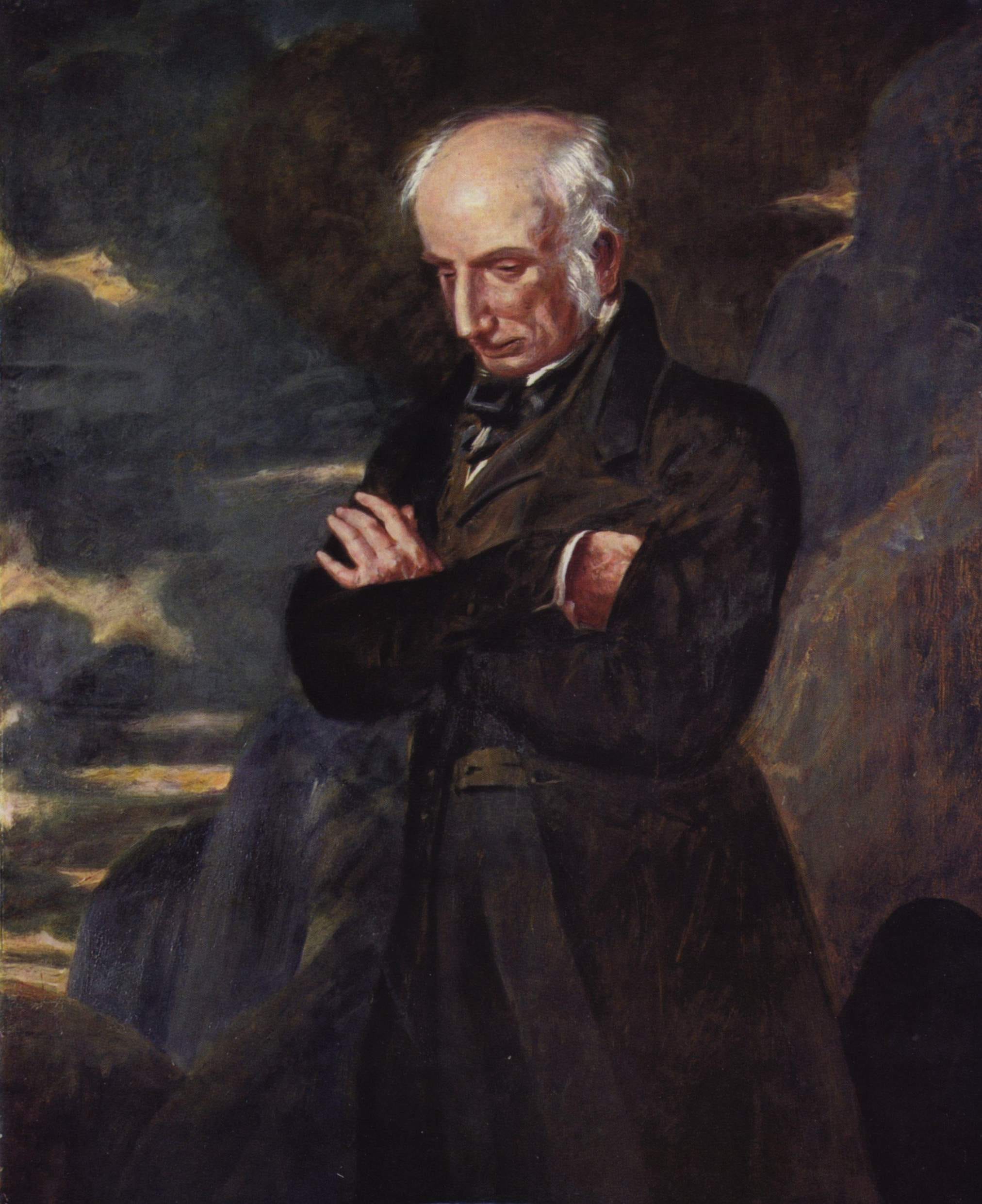
Admittedly, I had just argued in my biography Radical Wordsworth that not long after the poet returned to the lakes after his years of exile and his wandering into the French Revolution, it was his muse, not him, that died. But I had also argued that we ultimately have Wordsworth to thank for the Lake District eventually becoming a National Park where everyone can go to restore their spirits. And be so absorbed in the beauty of the landscape that they will not notice when a mere celebrity is among them. Though, as we discover in “Invisible String”, another song on folklore, Swift’s cover was nearly blown at a Windermere lunch spot:
Bold was the waitress on our three-year trip
Getting lunch down by the lakes
She said I looked like an American singer.
“Invisible String”, probably the very best song on folklore, is about Swift’s relationship with her English boyfriend Joe Alwyn. It reanimates the old trope of “we were always meant for each other” through a simple but memorable metaphor:
And isn’t it just so pretty to think
All along there was some
Invisible string
Tying you to me?
Alwyn read English Literature at Bristol University, so he would have been fully aware of the allusions here. First there is the closing dialogue of Ernest Hemingway’s great wartime love story, The Sun also Rises:
“Oh, Jake,” Brett said, “we could have had such a damned good time together.”
“Yes.” I said. “Isn’t it pretty to think so?”
And then there is the moment when Mr Rochester finally admits his love for Charlotte Brontë’s Jane Eyre:
I sometimes have a queer feeling with regard to you—especially when you are near me, as now: it is as if I had a string somewhere under my left ribs, tightly and inextricably knotted to a similar string situated in the corresponding quarter of your little frame.
Jane Eyre begins with a lonely young girl, who sees herself as an outsider, sitting in a window-seat reading a book. For generations, literature has been a resource for teenagers seeking solace amid heartbreak and the confusion of adolescence. Taylor Swift has become their voice.
It would seem that she has always had a literary sensibility. The earliest song on her debut album is called “The Outside.” “This is one of the first songs I ever wrote, and it talks about the very reason I ever started to write songs,” she explained in an interview, “It was when I was twelve years old, and a complete outcast at school.” The song suggests that the way to deal with this sense of exclusion is to carve your own path: “I tried to take the road less traveled by.” The line is a clear allusion to a staple of American middle school English classes, Robert Frost’s “The road not taken”:
Two roads diverged in a wood, and I—
I took the one less traveled by,
And that has made all the difference.
The image of the road not taken, or less traveled by, recurs in the songs “Illicit Affairs” and “’Tis the Damn Season” on the haunting albums folklore and evermore, which for millions, including many a Six Music Dad, became the soundtrack of lockdown. The road of song-writing has indeed made all the difference to Taylor Swift. By diverging from style to style, not always going down the same well-tried road in the way that so many musicians do, she has kept finding herself new audiences whilst retaining the loyalty of her original fans.
Swift is famous for hiding “Easter eggs” that tantalize her fans. One such was the date of the announcement that she was about to drop her second surprise album of 2020: 10th December. That was the birthday of Emily Dickinson, one of whose best-known poems about a love-triangle—a perennial Swiftian theme—ends:
I spilt the dew,
But took the morn –
I chose this single star
From out the wide night’s numbers –
Sue – forevermore!
Taylor Swift has not revealed whether this was the inspiration for the title track of evermore, but there is no doubt that some of the lyrics of that song have an extraordinarily Dickinson-like feel. “The cracks of light” and “Floors of a cabin creaking under my step” seem to me to evoke the slant light and claustrophobia of the secluded nineteenth-century New England genius, who has been a muse to some of the other great modern song-writers, such as Paul Simon (“For Emily, whenever I may find her”). And lines such as these could almost have been written by Dickinson herself:
Writing letters
Addressed to the fireAnd I was catching my breath
Staring out an open window
Catching my death
And I couldn’t be sure
I had a feeling so peculiar
That this pain would be for
Evermore.
The enduring advocacy of the distinguished critic Professor Sir Christopher Ricks eventually won Bob Dylan the Nobel Prize for Literature. I’m not sure I would yet go that far for Taylor Swift, but you never know.
Fantastic piece!
Wonderful piece - thank you! It sent me back to re-listen to Prof Ricks’ Radio 3 talk on Dylan (illegally recorded I suspect) from about 1979/1980 ‘And The Language That He Used’. Now I need to go and listen again to Folklore and Evermore